Prospective students

Naturopathic Medicine Degree: What to Check

Compare the exact degree, the real study commitment, and the requirements that apply to your plans before you apply.

Historic university award from the archive

Start with the exact degree

A familiar title does not answer the important questions.

A naturopathic medicine degree can sound like one clear destination. In practice, the decision rests on the specific credential, the school, the campus, the teaching format, and the place where you hope to use the qualification. Those details affect the time you will need, the cost you will carry, and the next steps that may be open to you.

For someone considering the naturopathic doctor pathway in the United States or Canada, the Council on Naturopathic Medical Education’s current program list is a sensible place to begin. The Council describes its accredited programs as four-year doctoral programs that are primarily campus-based. The listing is a starting point, not a substitute for the current written information from the exact school and program you may attend.

A useful comparison

Six questions to answer before you commit

01

Name the full credential

Ask for the degree title exactly as it will appear on your award and transcript. Request a plain explanation of what the program covers, what completion requires, and what the provider says the degree is intended to support. A broad description of natural medicine is not a substitute for the exact credential.

02

Confirm the current program and campus

Schools can offer more than one health program, operate from more than one location, or change their intake plans. Confirm the exact program, teaching location, current enrollment status, and anticipated start date. Keep every answer tied to the option you are comparing rather than the institution in general.

03

Read the program’s present status

When the accredited naturopathic doctor route is relevant to your goal, check the program on the accreditor’s current public list. Read any status information and ask the school to explain what it means for students. Save the date and the source you checked, because public listings and program notices can change.

04

Map the time you must be present

Ask how the current curriculum divides time among scheduled classes, independent study, laboratories, clinical work, and online learning. Request the academic calendar and a typical weekly schedule. These documents show whether travel, fixed daytime attendance, or time away from work is part of the commitment.

05

Calculate the full cost

Request a written estimate covering tuition, fees, books, equipment, examinations, insurance, travel, clinical requirements, and payment timing. Pair that figure with the expected length of study and your likely living costs. A headline tuition number can leave out the details that shape whether a plan is workable.

06

Check the path in your location

Ask the school what its program is designed to prepare students for, then independently check the rules that apply where you intend to live and work. Education, examinations, registration, professional titles, employment expectations, and insurance are related questions, but they are not decided by a school alone.

Historic university award from the archive

The university archive

Use historical records for context, not current promises.

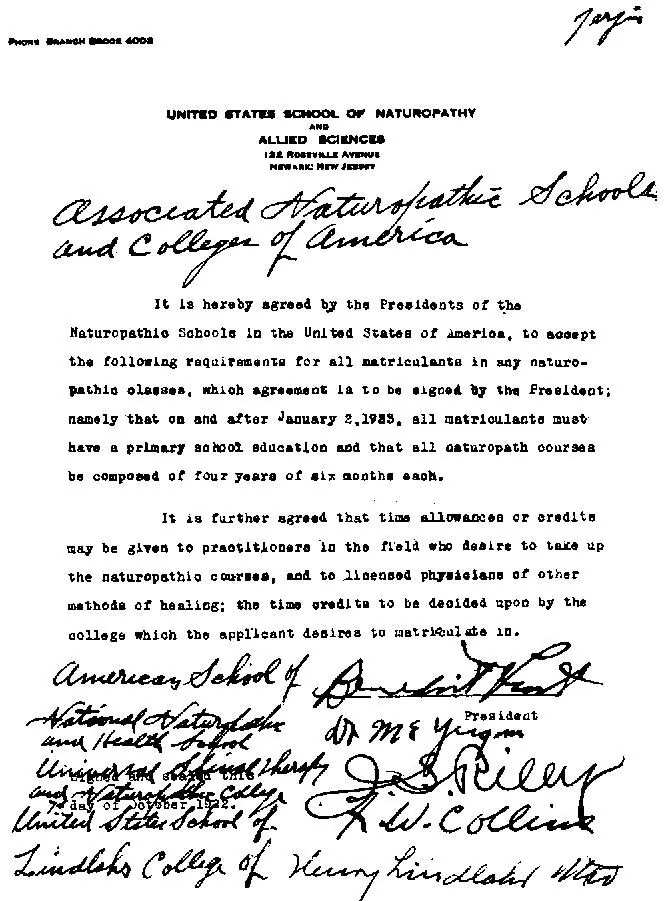
First National University of Naturopathy and Allied Sciences preserves historical material connected to naturopathic education. The United States School of Naturopathy & Allied Sciences record and the United States Naturopathic Institute record can help explain an older school name, degree title, or document.

Archive material cannot establish a current curriculum, fee, admissions decision, accreditation status, or professional eligibility. Use it to understand the historical record, then ask the provider and the appropriate independent authority for the current answers that apply to your decision.

Explore constituent-school records →

Ask for comparable answers

Put the same practical questions to every option.

General questions tend to bring general answers. Name the degree and campus you are considering, share the location where you hope to live or work, and ask for the documents that apply to your situation. This creates a fairer side-by-side comparison before you make a significant commitment.

Admission requirements

Ask what prior study, documents, interviews, language requirements, or experience are needed for the intended intake and how your background will be reviewed.

Curriculum and assessment

Request the current course sequence, assessment methods, progression rules, and standards required to remain in and complete the program.

Clinical and practical work

Ask where applied learning takes place, when it begins, who supervises it, and whether travel, placements, or additional costs apply.

Online and attendance pattern

Ask for a clear breakdown of what is online, on campus, in a laboratory, in a clinic, or scheduled at a fixed time or location.

Financial documents

Request the full fee schedule, refund terms, payment dates, and a list of expenses that fall outside the stated tuition.

Independent requirements

Identify the regulator or other authority for your intended location and ask for its current education, examination, and registration requirements.

Study format and clinical learning

Ask what the course format looks like in real life.

Online learning can be part of a program without describing the whole experience. The Council on Naturopathic Medical Education says its accredited naturopathic doctor programs are primarily campus-based and does not accredit programs delivered entirely or primarily through online or distance instruction. Ask the school to show how its current program divides time across teaching formats.

Clarify when practical work begins, where it happens, who supervises it, and whether a placement has to be arranged by you. Ask what happens if work, travel, caregiving, or another commitment makes attendance difficult. The goal is not simply to find flexibility, but to understand the real commitments behind it.

For a related comparison, the university’s online naturopathic degree guide helps separate an online element from a fully remote expectation. Read the current materials for the degree you are considering before assuming that two similarly named programs operate in the same way.

Historic university letter from the archive

Independent verification

Use the source that can answer the specific question.

A provider can explain its program. An accreditor can describe the status of a program within its own framework. A regulator or licensing authority can explain rules that apply where you intend to work. Each has a different role, so a careful decision checks the source that is responsible for the answer you need.

Review the Council on Naturopathic Medical Education’s education guidance when that framework applies to your plans, then check the current authority for your intended location. The university’s recognition guide and admissions guide can help you organize the questions and documents before you contact a provider.

Keep written answers, current listings, cost information, and your notes together. Returning to the actual documents makes it easier to compare options carefully and avoids a decision based on a remembered claim or an out-of-date page.

Frequently asked questions

Naturopathic medicine degree questions

What is a naturopathic medicine degree?

The phrase can refer to different credentials and learning pathways. Ask for the complete degree title, the current curriculum, where it is taught, and what the provider says the credential is designed to support.

Is a naturopathic medicine degree available fully online?

For the accredited naturopathic doctor pathway in the United States and Canada, the Council on Naturopathic Medical Education describes its programs as primarily campus-based and does not accredit programs delivered entirely or primarily online. A specific program may still include online or hybrid coursework, so ask for its current attendance and clinical requirements in writing.

How long does a naturopathic doctor program take?

The Council on Naturopathic Medical Education describes its accredited naturopathic doctor programs as four years. Actual calendars, prerequisite requirements, transfer-credit decisions, and program timing should be confirmed directly with the school you are considering.

Does a degree guarantee that I can practice anywhere?

No. A degree, an accreditation decision, licensing examinations, registration, insurance, and scope of practice are separate matters. Confirm the current rules that apply in the location where you intend to live and work before enrolling.

Request current information

Get the details for the degree you are considering.

Include the degree, campus, intended location, and the information you need to compare your options with confidence.

Request Information