

“Study naturopathic medicine” can describe very different goals. One person may want to understand the field before choosing a course. Another may be preparing for a doctoral program. Someone else may be trying to work out what a historic school name or credential means. Those are all reasonable starting points, but they require different information. The useful first move is to name your goal clearly, then collect current, written facts that answer it.
This guide offers a practical way to organize that research. It is not a promise about any particular program or professional pathway. Education, titles, accreditation, and rules for practice vary by institution and location. A careful comparison gives you a better foundation than a broad claim, a familiar abbreviation, or a course title alone.
1. Decide what you mean by “study”
Start with a one-sentence objective. Are you exploring the history and ideas associated with naturopathy? Looking for a general wellness course? Preparing for a specific naturopathic doctoral program? Researching an older record? Or considering a future role that may be regulated where you live? A clear objective stops you from comparing options that solve different problems.
For example, an introductory course may be useful for personal learning without being designed as professional preparation. A program that carries a clinical or doctoral title may have prerequisites, attendance expectations, practical study, and local implications that do not apply to a short course. Neither is automatically better. The question is whether its current purpose matches yours.
Write down the exact outcome you want, then ask every school or provider how its current program supports that outcome.
2. Identify the exact credential and school
Ask for the complete title of the award, not a shortened label. Record the provider’s legal name, the program name, the level of study, the expected completion date, and the document you would receive. This matters because similar phrases can be used for different forms of education in different places.
Next, look for current program materials: an admissions page, catalog, student handbook, curriculum outline, fee schedule, and a named contact who can answer questions. Keep copies or links in one comparison file. If an important point is only described in a conversation, send a short follow-up asking for it in writing. That is not being difficult. It is sensible preparation for a substantial time and financial commitment.
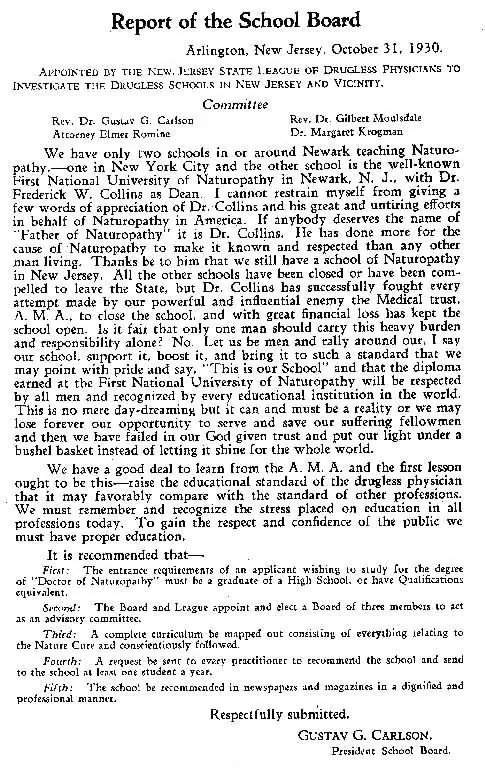
The university’s constituent-school records and institutional history can help place older names and degree titles in historical context. They are not a substitute for a current prospectus, enrollment agreement, timetable, or statement about professional rights today. Keep historical evidence and current program evidence in separate columns of your notes.

3. Map the academic preparation you actually need
Admission requirements are program-specific, so avoid building a plan from a generic list found in a search result. For prospective students considering programs within the United States and Canada, the American Association of Naturopathic Medical Colleges’ current prerequisite comparison is a useful starting point because it shows that schools can ask for different combinations of biology, chemistry, physics, anatomy, physiology, mathematics, psychology, and other preparation.
That comparison is a research aid, not an admissions decision. Confirm your own transcripts with the school you are considering before you enroll in a prerequisite. Ask whether a course must include a laboratory, whether an online or hybrid class is accepted, how old coursework may be, and whether credits need to come from a particular type of institution. A course that appears similar by name may not meet a program’s current requirement.
Use a simple grid with each school across the top and prerequisites down the side. Include completed courses, grades, lab components, missing subjects, application deadlines, and the name of the admissions contact who verified your information. A concrete grid makes it much easier to see whether you need one course, a sequence of courses, or a different route altogether.
4. Check the learning format before you plan your time
“Online” is not a complete description of a study arrangement. It may refer to some lectures, a hybrid pattern, online prerequisites, or a fully remote short course. Ask what is taught online, what requires a scheduled meeting, where practical work happens, how assessments are supervised, and whether travel or placement costs apply.
For students considering an ND pathway in the United States or Canada, the Council on Naturopathic Medical Education’s accredited-programs information says that the programs it accredits are four-year, primarily campus-based doctoral programs and are not delivered primarily or entirely online. That does not answer every question about naturopathy education worldwide, but it is an important distinction for anyone comparing claims about an online ND route in those jurisdictions.
Put the weekly pattern into ordinary life terms. Ask how many hours are scheduled, how much independent preparation is expected, whether clinical or practical elements occur at fixed times, and what happens if you need to work or care for family members. A realistic calendar is more useful than a promotional phrase such as “flexible learning.”
5. Separate accreditation, recognition, and permission to practice
These terms are often grouped together, but they answer different questions. Accreditation generally concerns whether a program or institution meets the standards of a named accrediting body. Recognition may describe many different relationships, from membership to institutional status. Permission to use a protected title or carry out regulated activities is usually a question for the relevant authority where a person lives and works.
When a program makes a claim, write it down exactly, then ask: recognized by whom, for what purpose, in which location, and for which current program? Follow the claim to the organization that is said to grant it. The CNME publishes its own current list of accredited programs, including explanatory information about its scope. That kind of primary source is more useful than a badge on a marketing page.
Local rules matter because a degree title on its own does not determine what a graduate may legally call themselves or do. If professional practice is part of your goal, check the current requirements with the regulator or licensing authority for the jurisdiction you have in mind. If you may move after graduation, check the destination as well. Do not leave that question until after paying a deposit.
6. Read the curriculum and practical arrangements
A title tells you little about the day-to-day learning experience. Request the curriculum, course descriptions, assessment approach, faculty information, and an explanation of any practical or clinical components. If a program refers to placements, ask whether they are guaranteed, where they occur, who supervises them, and what costs are not included in tuition.
Study should also build the habits needed to handle health information responsibly. The National Center for Complementary and Integrative Health advises people to consider the evidence, safety, and possible interactions associated with complementary approaches, and to discuss health decisions with qualified providers. A serious educational conversation should leave room for evidence, uncertainty, safety, referral, and collaboration, not only broad promises about being natural or holistic.
For your comparison, note what each program says about research literacy, ethics, communication, supervised learning, safety, and professional boundaries. Then ask what evidence the school provides for those statements. The goal is not to find a flawless brochure. It is to find information precise enough to test against your own needs and the rules that apply to your plans.

7. Calculate the full commitment, then request answers
Tuition is only one part of the decision. Build a full-cost list that includes application fees, deposits, books, equipment, insurance, travel, housing, practical requirements, examinations, and the expected cost of time away from paid work. Ask how tuition can change from year to year, what happens if a course is delayed, and what refund or withdrawal terms apply. Read those terms before you commit, not after.
Then prepare a short set of written questions. A good message identifies the exact program and asks for the details you could not verify in the published material. First National University’s admissions guide outlines the key present-day information worth gathering, including program availability, delivery, costs, and timing. Its recognition guide can help you keep the question of professional pathways tied to the location that matters to you.
A clear response is useful evidence in itself. It shows whether an institution can explain its offer precisely, distinguish its history from its current program, and point you to the right source when a question belongs to an external authority. If the answer is vague, incomplete, or inconsistent with a published source, pause. You do not need to resolve every uncertainty in a single conversation, but you do need enough reliable information to make an informed decision.
A practical research plan
- Name your goal. Write one sentence describing whether you are exploring, preparing for study, researching a record, or planning for a regulated role.
- Build a shortlist. Record the full program name, provider, location, current link, and admissions contact for each option.
- Compare the same facts. Use one worksheet for credential, prerequisites, curriculum, learning format, practical work, costs, recognition claims, and local implications.
- Verify important claims at the source. Check accreditors, regulators, and school materials directly rather than relying on copied descriptions.
- Ask in writing. Request current confirmation of any point that could affect your time, money, or future plans.
- Give yourself time. Review the documents after the conversation, compare the answers, and seek independent advice when the decision has professional or legal consequences.
How the university can help
First National University of Naturopathy and Allied Sciences preserves a historical record of schools, documents, and degree titles associated with natural medicine education. That record can give researchers and former students useful context. It does not replace the present-day details needed for a new educational or professional decision.
If you are trying to understand a school name, historic degree, or university record, begin with the document collection, the constituent-school pages, and the university’s information request page. For current program availability, costs, delivery, and recognition questions, ask for written information that applies to the exact option you are considering.
Study with specificity
The most useful research does not start by assuming every course with a familiar title offers the same outcome. It begins by identifying the goal, verifying the award, understanding the study pattern, and checking the rules that apply where you plan to live and work. That process takes a little longer than scanning a headline, but it gives you a comparison you can trust and revisit.
Keep your notes, save the sources, and make your next step the one that answers the largest remaining question. When you can explain the exact program, the practical commitment, the total cost, and the local implications in your own words, you are much closer to a sound decision.


