

Naturopathy is an umbrella term for approaches to health that emphasize natural healing methods and whole-person care. The meaning, training, and professional scope behind the term are not identical everywhere, which is why context matters.
“Naturopathy” is a word many people encounter while exploring natural medicine, looking at health professions, or reviewing a historic degree. It can sound straightforward, but it carries different meanings across time and place. A useful starting point is to separate three questions: what the term has meant historically, what people mean when they use it today, and what a particular course or practitioner is actually qualified to offer.
The United States National Center for Complementary and Integrative Health describes naturopathy as a system that uses a variety of traditional and modern methods. That broad description explains why a label alone is not enough to answer practical questions. Education, local law, professional standards, and the specific person or institution involved all affect what “naturopathy” means in practice.
Where did naturopathy come from?
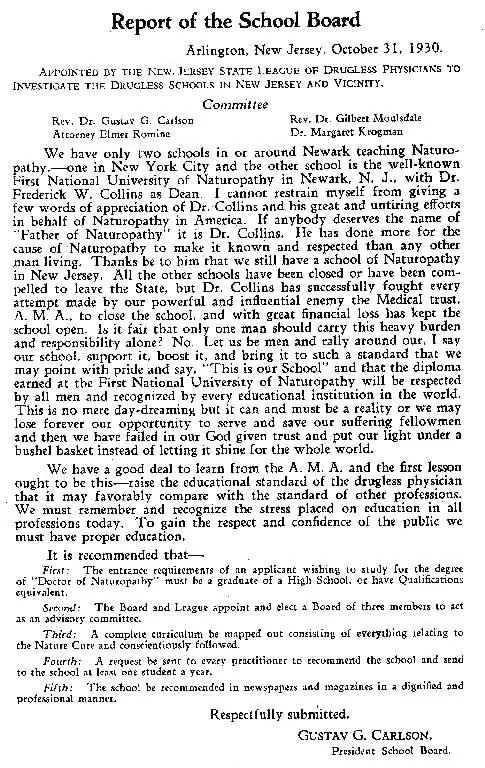
Naturopathy developed during a period when several movements were questioning how health, lifestyle, diet, exercise, manual methods, and medicine should relate to one another. In North America, the term became associated with early twentieth-century natural-healing traditions that brought together ideas from Europe and the United States. Its history is intertwined with institutions, publications, professional groups, and individual teachers, not a single uninterrupted curriculum.
A historical overview in the Journal of Evidence-Based Complementary & Alternative Medicine traces the growth of naturopathic medicine in the United States through shifts in professional organization, education, and regulation. That history matters because older certificates and school names describe their own era. They should not be read as automatic proof of a current course, a modern license, or a professional pathway today.
What does naturopathy include today?
In current conversation, naturopathy may refer to a philosophy of care, a course of study, a practitioner, or a regulated profession. Some people use it broadly for lifestyle-oriented advice and traditional practices. Others mean a specific professional education. Because those uses overlap, a serious conversation should move beyond general terms and ask for concrete details.
Depending on the setting, the conversation may include nutrition, movement, stress, sleep, herbal products, manual approaches, or health education. These are not automatically interchangeable, and they are not automatically appropriate for every person. The National Center for Complementary and Integrative Health offers evidence-based information about herbs and supplements, including safety considerations and the possibility of interactions with medicines. That is a useful reminder that “natural” is not a substitute for careful decision-making.
For health decisions, it is reasonable to ask what evidence supports a recommendation, what its limits are, and whether it could delay needed diagnosis or treatment. A qualified healthcare professional who knows your medical history is the right person to consult about symptoms, pregnancy, prescriptions, or a serious condition. This article is educational background, not individual medical advice.
Why training and titles need a closer look
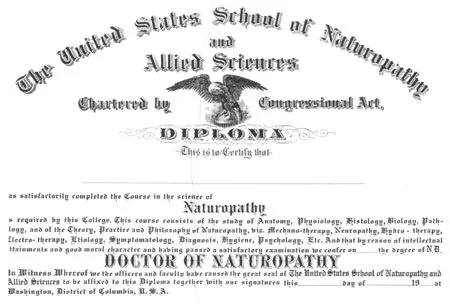
Titles can look familiar while standing for very different programs. A course may focus on historical study, wellness education, clinical training, or another area entirely. The same abbreviation can be used differently between jurisdictions. In the United States, for example, a person’s ability to diagnose, prescribe, use a title, or call themselves a physician is governed by state law and professional regulation, not by a reader’s assumption about the name of a credential.
When a program represents itself as leading toward a professional role, verify that claim with the body responsible for education or regulation in the location where you intend to work. The Council on Naturopathic Medical Education’s accredited programs list is one example of a source that identifies programs within its own accreditation scope. It is not a universal answer for every country or every form of naturopathic study, which is precisely why local verification is essential.
There is also a difference between learning about naturopathy and qualifying for regulated practice. A worthwhile program should be able to explain that difference plainly. If an answer is vague, rushed, or relies only on broad promises, pause and request written information.
How to read claims with care
Health and education claims deserve the same level of attention. A program may use phrases such as “recognized,” “approved,” “accredited,” or “international.” A practitioner may describe an approach as “holistic,” “natural,” or “root-cause.” These words can be meaningful, but they are not complete answers. The relevant question is always: recognized or accredited by whom, for what exact purpose, and in which location?
For study, distinguish between an institution’s legal status, a program’s academic accreditation, a professional association’s membership criteria, and a regulator’s permission to practice. These are separate things. An institution can have a long history without offering a current professional qualification. A course can be academically useful without creating a legal right to use a protected title. A professional association can offer membership without acting as a government regulator. Asking the right follow-up question keeps those distinctions clear.
For healthcare, look for transparent communication about limits as well as benefits. A responsible practitioner explains their training, credentials, scope, fees, and when they will refer someone to another clinician. They do not ask a person to ignore serious symptoms, stop prescribed treatment without appropriate oversight, or rely on a broad promise where an individual assessment is needed. The National Library of Medicine’s overview of naturopathic medicine notes the field’s varied modalities and the importance of understanding the practitioner’s background and jurisdiction.
It is also helpful to separate personal experience from evidence. A personal story can explain why someone values a particular approach, but it cannot establish that an intervention works for everyone or for a specific serious condition. Look for reliable research, relevant safety information, and a clear explanation of uncertainty. That approach is not dismissive of traditional practices. It is a sensible way to make room for both curiosity and care.
What a useful program conversation looks like
When you contact a school, the quality of the reply is part of the information you are evaluating. You should be able to understand what is being offered without decoding marketing language. A clear response names the program, describes the delivery model, identifies what students do in practice, explains the total expected cost, and sets out who can answer further questions. It should also identify any external body whose standards or recognition are being relied upon.
Ask for the current version of the student handbook or course outline. Read the assessment and attendance requirements, not only the summary page. If clinical practice is mentioned, ask where it takes place, who supervises it, what insurance or checks are required, and whether the experience is guaranteed or competitive. If distance learning is mentioned, ask what work is completed remotely and what work must be completed in person. These details affect both the student experience and the real cost of a course.
Then test the program against your own goal. Someone interested in historical research needs different evidence from someone seeking a career change, and both need different information from a person who hopes to practice in a regulated environment. Write down your goal in one sentence before you compare options. That simple step makes it easier to notice when a course is answering a different question from the one you actually have.
Finally, give yourself time to compare answers. A significant educational decision should not depend on a deadline created by a sales conversation. Keep copies of emails, course documents, fee schedules, and any statement about recognition. When the information is in front of you, gaps become easier to spot and follow-up questions become more precise.
Questions to ask before you enroll
Study is a substantial commitment of time and money. Before you apply, make your decision based on the current written facts, not the history of a school name or a general description of a field. Start by identifying the exact course you are considering, then ask questions that make its present-day value clear. Treat every answer as a documentable point of comparison. A clear answer today is easier to evaluate, and easier to revisit, than a verbal assurance that cannot be checked later.
- What is the exact program title? Ask for the credential name exactly as it appears on the award and transcript.
- What will I study? Request the curriculum, assessment approach, expected workload, and any supervised practical or clinical requirements.
- How is the course delivered? Clarify location, distance-learning elements, attendance expectations, and any travel or placement requirements.
- What does it cost in full? Ask for tuition, fees, materials, payment timing, and the expected length of study in writing.
- What does the credential allow me to do? Confirm this with the relevant regulator or professional body where you intend to live and work.
- Who can answer follow-up questions? A named contact and clear written responses make later comparison much easier.
First National University’s admissions guide outlines the core information worth gathering before enrollment, including current program availability, delivery format, cost, and local recognition. Its recognition page also explains why professional pathways should be checked in the jurisdiction that matters to you.
How the university’s historical record fits in
First National University of Naturopathy and Allied Sciences preserves a record of institutions and degrees connected to early natural medicine education. That history can be valuable for researchers, former students, families, and anyone trying to understand how a name or credential appeared in its original setting. The university’s institutional history and public documents provide a starting point for that work.
The archive should be read alongside current information. A historic degree may reveal what an institution taught or named in a particular period, but it does not by itself answer whether a program is currently accepting students, what the curriculum now includes, or what professional recognition applies. For those decisions, review the relevant constituent-school records, ask for up-to-date written details, and use the university contact page to request information directly.
A practical way to move forward
If you are simply curious, start with the history and definitions, then notice where sources disagree or use the same term differently. If you are considering study, build a side-by-side written comparison of the courses you are evaluating. If you are considering care, look at the individual practitioner’s education, license where applicable, scope, and willingness to coordinate safely with other healthcare professionals.
Good decisions in this area are specific. They are based on the actual program, actual practitioner, actual local rules, and your own needs, rather than on a label that can mean different things to different people. Taking an extra day to compare the documents and questions you have collected is often more useful than making an early decision based on a broad description alone. Clear written facts make that comparison fairer and easier to revisit.


