
The phrase “naturopathic medical school requirements” can cover admission, education, and professional rules. Start with the exact school and the place where you intend to use the qualification.
People researching naturopathic medical school are often trying to answer an important practical question: what would I need to do before I can apply, study, and eventually pursue the role I have in mind? The answer is not a universal checklist. Requirements can differ between programs and locations, while the meaning of a credential can depend on the rules where a graduate plans to live and work.
A useful approach is to separate the decision into three parts. First, identify the exact program. Next, check the school’s current admissions requirements. Finally, verify what the qualification can mean in the location that matters to you. This prevents a promising course title or an old web page from doing more work than it should.
The Council on Naturopathic Medical Education explains its role in accrediting doctoral naturopathic programs in the United States and Canada. Its current program list is a sensible starting place when that accreditation scope is relevant to your goal. It is not a substitute for asking the school about its current requirements or checking local professional rules yourself.
Start with the exact program
Before comparing requirements, write down the full name of each program, the school, the campus or delivery location, and the award title. Similar language can describe very different kinds of study. A natural-health course, a historical degree record, a private certificate, and a professional doctoral program are not interchangeable, even if they use related words.
Ask every school for the current admissions page, program handbook, curriculum outline, fee schedule, and application deadline. Keep the documents with the date you obtained them. A course page can change, and a verbal answer is difficult to compare later. Current written material gives you something specific to test against your own education, budget, and plans.
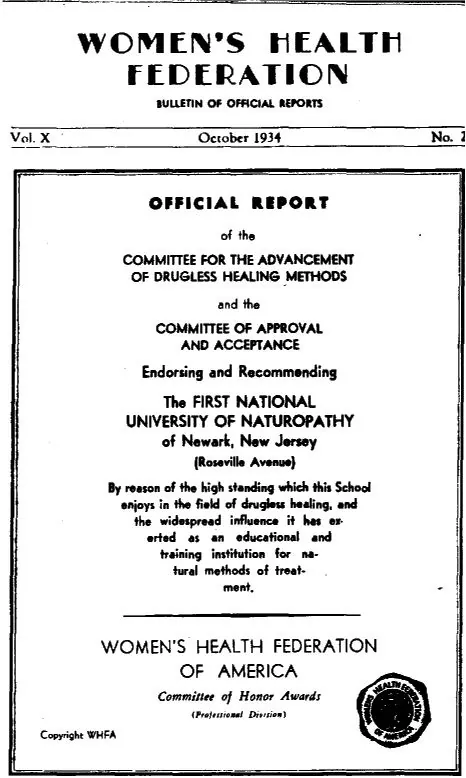
The university’s naturopathic degree programs guide is designed to help readers frame this first comparison. For people researching an older school name or document, the university’s constituent-school records and institutional history offer useful context. They do not establish that a historical course is currently offered or that a historic award creates a present-day professional pathway.
Check academic prerequisites in writing
Admission requirements commonly begin with earlier education. The details are school-specific, which is exactly why a careful applicant should avoid working from a generic list. The Association of Accredited Naturopathic Medical Colleges publishes a comparison of prerequisites for its member programs and makes clear that applicants should confirm the current requirements with the school they are considering.
For each program, ask whether an undergraduate degree is required, which coursework must be completed, what grade standard applies, whether laboratory work is expected, and whether courses can still be in progress when you apply. Also ask how transfer credit, overseas qualifications, older courses, or a change of major are assessed. A course that sounds relevant may not meet a particular school’s requirement, so get an answer about your actual transcript rather than trying to interpret broad subject labels alone.
Do not assume that an application is only an academic checklist. Schools may ask for transcripts, personal statements, recommendations, interviews, proof of language proficiency, or other material. Ask what is required, which documents must arrive directly from another institution, what the review timetable looks like, and what happens if a required item is delayed. A clear, dated list reduces avoidable surprises.
Look beyond the minimum entry list
Meeting a minimum prerequisite does not automatically answer whether the program suits you. Read the curriculum and compare it with the work you expect to do after study. Look at the order of subjects, the expected weekly workload, the assessments, and the support offered to students. If the program discusses clinical or practical learning, ask for a plain description of where that work happens, who supervises it, how it is evaluated, and whether it is guaranteed.
The AANMC’s curriculum overview describes the foundational biomedical and clinical subjects associated with its member programs. That is useful background, but it cannot tell you what every individual course requires today. A program’s own written materials should identify its current sequence, attendance expectations, practical arrangements, and the costs attached to them.
Use a simple comparison sheet with the same headings for every school: award title, entry requirements, curriculum, practical work, delivery format, total cost, policies, and unanswered questions. The format is less important than the discipline of comparing like with like. It is much easier to spot a gap when every school has had the same chance to explain itself.
Understand the study format before you commit
Words such as online, hybrid, flexible, and part-time do not explain a student’s actual experience. Ask what happens in a typical week, how much work must be completed at a set time, where assessments occur, and which elements require travel or in-person attendance. If the program includes practical work, ask whether the school arranges it, whether there are extra fees, and what happens if placements or sessions are unavailable.
This is not a minor administrative detail. Study format can affect childcare, employment, travel, accommodation, insurance, equipment, and the total time required to complete the award. It can also affect whether a program aligns with a professional route you hope to follow. Ask for the current plan in writing, including the parts that cannot be completed remotely.
Readers comparing distance options can also use the Journal’s online naturopathy degree guide and course comparison guide. Both are intended to help you form specific questions, not replace the current information supplied by the school you may attend.
Separate program approval from professional permission
Accreditation, institutional history, professional association membership, examination eligibility, registration, and legal authority are different facts. One may be relevant to another, but none should be assumed from a familiar title or a general claim. Ask the school to name every organization behind a statement about approval, recognition, or professional outcomes. Then read that organization’s current information directly.
The CNME’s accredited-programs list can help a reader see the programs within its stated scope. If your plans involve a protected title, clinical work, insurance, prescribing, or relocation, take the exact program information to the relevant regulator or professional authority where you plan to work. That authority is better placed to explain the rules that apply to you personally.
First National University’s recognition guide sets out the distinction between a school’s historical record, a credential, an outside body’s standards, and legal permission to practice. Keeping those layers separate is not needless caution. It is how an applicant avoids making a major education decision on the strength of a claim that answers only one part of the question.

Calculate the full financial and time commitment
A published tuition figure is only one part of the commitment. Request a written estimate that includes application and registration fees, books, equipment, examinations, travel, practical work, insurance, technology, housing where relevant, and the schedule for payment. Ask whether fees can change during the program, what is refundable, and what happens if your studies are delayed.
Read the enrollment terms before you pay a deposit. Make sure the award title, delivery arrangement, dates, fees, and support described in the documents match the information you were given. If a point matters to your decision, keep it in writing. A thoughtful school should be able to explain its terms without asking you to fill an important gap with an assumption.
It can also help to make a realistic time budget. Include class time, independent study, practical requirements, travel, assessment periods, and the time needed to prepare applications. A course may be worthwhile and still be the wrong fit for your responsibilities at a particular moment. Seeing the full commitment on paper makes that judgment fairer.
Questions to ask before you submit an application
A short, consistent question list keeps a complicated search practical. Ask each school for the exact award title, the admissions requirements that apply to your own education, a current curriculum, the expected time commitment, the full fee schedule, and a clear explanation of any practical or clinical components. If the answer refers to an outside body, ask for that body’s name and read its current information yourself.
It is also reasonable to ask how the school handles a missing prerequisite, a delayed transcript, a pause in study, a failed assessment, or a change in delivery format. These questions do not suggest that something will go wrong. They show whether the school has communicated the real conditions of enrolment clearly enough for a prospective student to make an informed commitment.
Save the answers alongside the source document or email. A side-by-side record is more useful than a collection of impressions, especially when several schools seem attractive for different reasons. It gives you time to identify which differences are genuinely important to your aims and which are simply different ways of describing the same requirement.
Build a verification file before you apply
Create one folder for each program and save the current documents, emails, notes from calls, fee schedules, and links to official sources. Label what each item proves. A school describes its offer. An accreditor describes its standards and scope. A regulator explains local rules. Those sources can support one another, but they should not be treated as if they all make the same promise.
Write down your intended role and location in one sentence before you begin. Then check whether every program can answer the questions needed for that goal: What is the exact credential? What prerequisites apply to me? What will I study? How will practical learning work? What will it cost? What does the qualification mean where I plan to live and work?
The university’s admissions guide and contact page are useful places to request current information about a specific university program or historical record. A written response is especially valuable when you are comparing documents from more than one provider or need to discuss the decision with family, an employer, or an adviser.
Use historical records as context, not as a shortcut
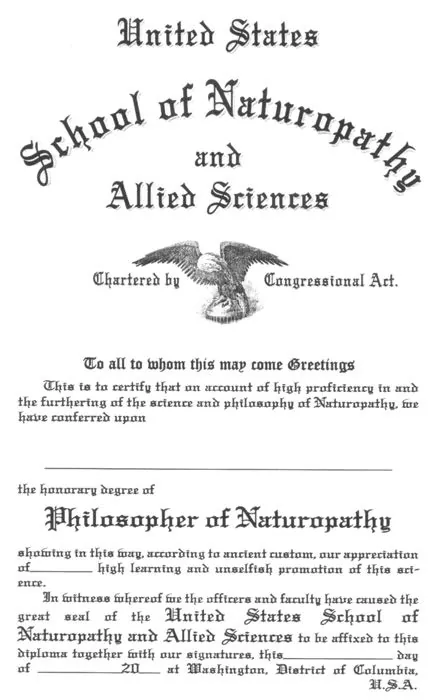
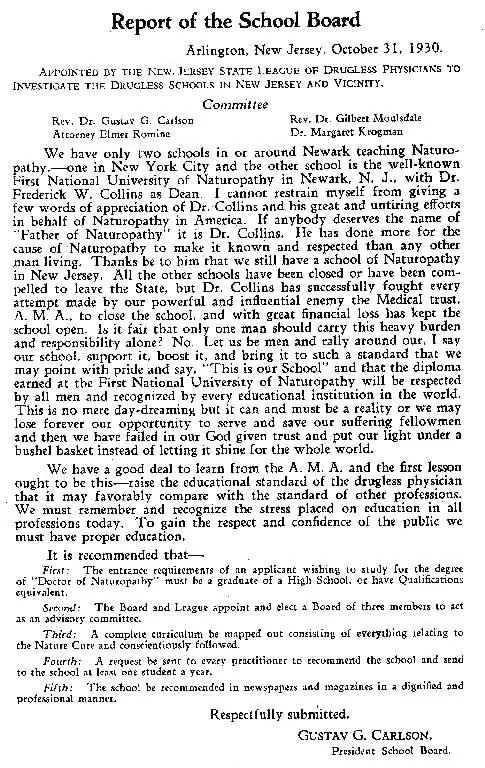
First National University of Naturopathy and Allied Sciences preserves records connected to early natural medicine education. The United States School of Naturopathy & Allied Sciences record, the United States Naturopathic Institute record, and the document collection can help researchers, former students, and families understand how an institutional name or degree was used in its historical setting.
That background can be meaningful. It does not establish a current intake, curriculum, professional status, or outcome. For a present-day education decision, pair the archive with the current program documents, the relevant accrediting information, and the local authority that governs the role you hope to pursue.
A practical next step
Good research makes a complicated decision more manageable. Start with the exact program, gather its current written requirements, compare the same facts across every option, and check the professional implications in the place that matters to you. If an answer is vague, ask for the document or organization that supports it.
The aim is not to eliminate every uncertainty. It is to make the important questions visible before you commit your money, time, and attention. That gives you a more reliable basis for choosing a naturopathic medical school that fits your education, circumstances, and intended path.


