

“Naturopath” can describe different education, credentials, and legal roles in different places. Start by defining the role you want, then verify the path that applies where you intend to live and work.
People asking how to become a naturopath are usually trying to make a career decision, not collect a vague list of classes. The difficulty is that the same word can point to very different training routes. A course may offer a certificate of completion. Another may award an academic degree. A professional association may offer a private credential. A regulator may set separate requirements for a protected title or particular activities.
That does not mean the question has no answer. It means the useful answer begins with careful research. Before you invest time or tuition, identify the exact work you hope to do, the location where you expect to do it, and the credential that is meant to support that goal. Then check each claim with the organization responsible for it.
The National Center for Complementary and Integrative Health describes naturopathy as a broad health system with historical roots and a range of traditional and modern approaches. That broad label is one reason a program name alone cannot tell you what a qualification means in practice.
1. Define the role before you choose a school
Start with a plain-language description of the work you want to pursue. Are you looking for personal education, a course in a specific modality, a professional role, or a regulated naturopathic doctor pathway? Those are not interchangeable goals. The clearer your aim, the easier it is to spot whether a provider is answering your actual question or only describing the most attractive part of its offer.
Write down where you expect to live and work, too. Professional titles, registration, and permitted activities can change across countries, states, provinces, and territories. A program that makes sense for one person can be a poor fit for another person’s location and career plan.
Make a short research brief before you compare programs: the role you want, the places you may work, whether you need a degree or another award, and the activities you hope the training will prepare you for. The university’s recognition guide explains why academic credentials, institutional history, private memberships, and legal authority should be treated as separate facts.
2. Identify the exact credential on offer
Ask every provider for the full title of the award exactly as it will appear on a transcript, certificate, or degree document. Keep the provider’s written answer with the course outline. Familiar words such as “certification,” “diploma,” “degree,” “registration,” and “board certification” can have very different meanings.
A course-completion certificate may be useful evidence that a student finished a provider’s stated curriculum. It does not automatically establish that another school will award credit, that a professional body recognizes the holder, or that a regulator permits the holder to use a title or provide a service. A degree title is not a substitute for checking those questions either.
Compare the same details for every option: award title, entry requirements, curriculum, assessment, practical or clinical work, expected study time, total cost, refund terms, and what the provider says the course is designed to prepare a graduate to do. The site’s admissions information is a useful example of the kinds of current, written details a prospective student should request, but every program needs to be checked on its own merits.
3. Check the education route against the relevant standards
For a U.S. or Canadian naturopathic doctor route, the exact program matters. The Council on Naturopathic Medical Education explains its role in accrediting doctoral naturopathic medicine programs and describes its accredited programs as primarily campus-based, typically four years long, with clinical training. It also says it does not accredit programs delivered primarily or entirely online.
This information is useful only when it applies to the precise school and award you are considering. Use the Council’s current accredited-programs list rather than relying on a provider’s summary, an old brochure, or a similar-sounding program name. Check the listed campus, degree, accreditation status, and any current public notices.
Admission requirements need the same care. The Association of Accredited Naturopathic Medical Colleges notes that its member programs require prerequisite courses, while the exact requirements can vary by school. Ask the programs on your shortlist which prerequisites apply to you, whether previous study is accepted, and what else belongs in a complete application.
4. Verify what local rules allow after graduation
Education is only one part of the decision. A credential may have a different practical effect depending on where you intend to work. Before you enroll, find the regulator, licensing board, or other official authority for that location. Ask about the exact qualification, the title you plan to use, and the activities you hope to carry out.
Bring precise documents to that conversation: the program title, curriculum, delivery format, accreditation statement, and the provider’s written explanation of the graduate outcome. General questions produce general answers. Exact documents make it easier for an authority to tell you what is relevant and what still needs verification.
Do this early, not after graduation. If your goal involves a protected title, independent practice, clinical work, insurance, or relocation, the local requirements may be the deciding factor. The university’s naturopathy facts and statistics page also gives context on how regulation varies, but an official local authority is the source for a personal decision.
5. Ask how study actually happens
A course page can make learning look simpler than it is. Ask what happens in a normal week, not just what appears in the headline. Confirm the live and self-paced elements, assessment format, practical sessions, supervision, location of any placements, travel, equipment, and every cost outside the advertised tuition.
If a program says it is online, ask exactly what that means. Some courses may use remote teaching alongside scheduled attendance, proctored assessments, workshops, or practical requirements. A careful answer names which parts can be completed remotely, where in-person work happens, who supervises it, and whether those arrangements are guaranteed.
The Journal’s online naturopathy degree guide and naturopathy course guide offer a practical comparison checklist. Use the same list for every provider. It is much easier to make a fair decision when no course is allowed to hide behind different language or a partial price.
6. Test the claim against the person you want to become
Before applying, read each promise as if it were a question. If a course says it prepares graduates for a career, ask which career, in which places, under which rules, and with what evidence. If it says a qualification is recognized, ask who recognizes it, whether the recognition covers the exact award, and whether the statement is current. If it says a graduate can work with clients, ask what training, supervision, registration, and limits apply where you plan to work.
This is not cynicism. It is a fair way to compare education that could shape several years of your life. A responsible provider should be able to distinguish its course outcomes from legal permission, private membership, and a claim about another organization. It should also be willing to put important answers in writing.
Ask about support when something goes wrong as well as when everything goes to plan. What happens if you need to pause study, cannot attend a practical session, or want to transfer? Who answers questions about admissions, academic progress, complaints, and financial terms? Clear policies are not a guarantee of a good experience, but vague or unavailable policies make it harder to judge what you are agreeing to.
Finally, be honest about the responsibilities of any health-related role. Education should not blur the difference between learning about wellness and having authority to diagnose, treat urgent conditions, prescribe, or use a protected title. The National Center for Complementary and Integrative Health’s consumer information on herbs and supplements is a useful reminder that natural products can still have risks and interactions. Good training makes safety, referral, evidence, and scope part of the conversation.
7. Build a verification file before you apply
Set up one folder for each program. Save the current course outline, fee schedule, enrollment terms, accreditation statement, emails, and notes from official authorities. Label each item with the date and what it actually proves. A school website can explain the school’s offer. An accreditor can explain its scope. A regulator can explain the local rules. Keeping those sources separate helps you see unanswered questions instead of assuming that one favorable statement answers all of them.
Use one comparison table with consistent headings: exact award, provider, location, entry requirements, curriculum, assessment, practical work, delivery, total cost, accreditation claim, local rules, and questions still unanswered. If a provider will not give a clear written answer about a central point, note that rather than filling the gap with an assumption.
Set a decision date only after you have the key documents. Pressure to make an immediate deposit, accept a verbal promise, or rely on an expiring offer can make careful comparison difficult. A legitimate education decision deserves enough time to read the terms, check the named organizations, and ask the one or two questions that could change your choice.
This approach also helps when you need to discuss the decision with a family member, employer, or adviser. You can show the original information, explain what has been independently verified, and identify what remains uncertain. That is far more reliable than making a career choice from a course title, a social-media claim, or a sales conversation.
How First National University can help
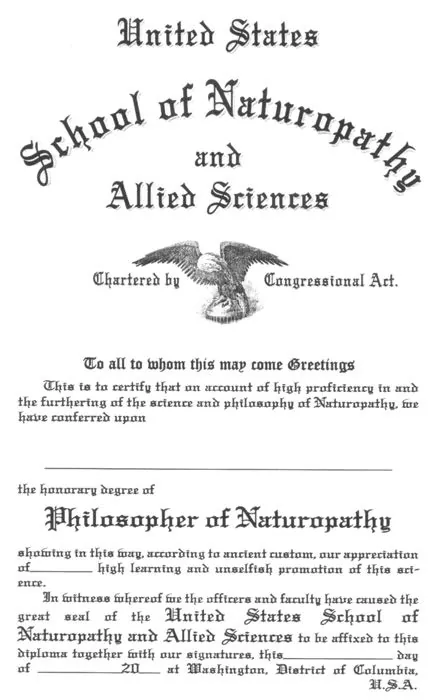
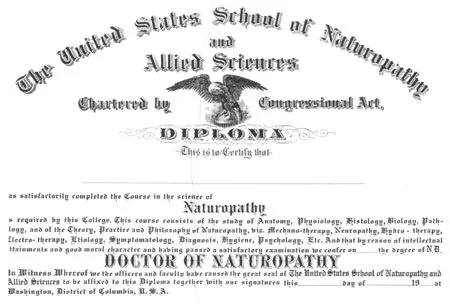
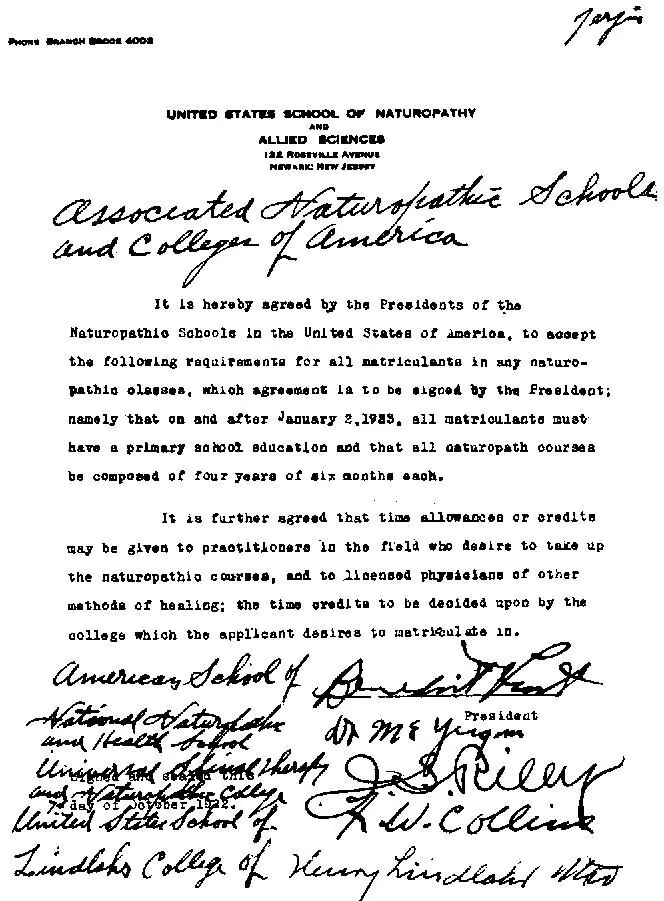
First National University of Naturopathy and Allied Sciences preserves historical material connected to natural medicine education. The records for the United States School of Naturopathy & Allied Sciences, the United States Naturopathic Institute, and the document collection can help researchers, former students, and families understand the historical setting of a school name, degree, or institutional relationship.
Those records are historical context, not a claim about current professional status or program availability. For current university information, the contact page is the right place to request a written response about the specific record or program you are researching.
Choose the path you can verify
Becoming a naturopath is not one universal checklist. The responsible route starts with the role you want, the place you intend to work, and the credential that truthfully matches both. Check the exact award, the actual curriculum, the relevant accreditor, and the local rules before you commit.
A course can be meaningful without doing everything a reader hopes it will do. Once you understand its purpose and limits, you can decide whether it is a sound investment of your time, money, and attention. The best next step is usually the one you can explain clearly, support with current documents, and revisit confidently when your circumstances change.


